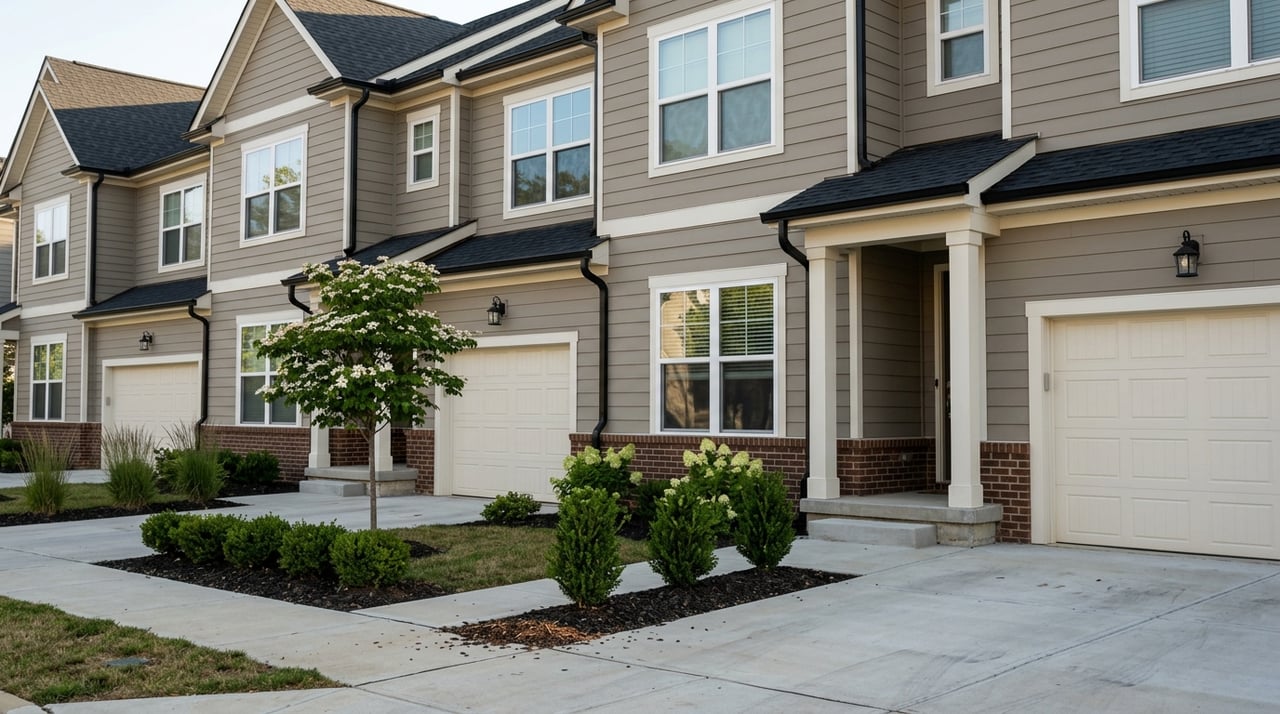
If you are eyeing a new or newer townhome in Ranson, WV, you are probably asking a very practical question: what do you really get for the price, and how does townhome living actually work day to day? That is especially important if you are relocating from Northern Virginia or elsewhere in the DC region and want more space, a manageable commute, and fewer surprises after you sign. In this guide, you will get a clear look at what new-construction townhome living in Ranson can look like, what features and fees tend to vary, and what questions to ask before you commit. Let’s dive in.
Why Ranson Draws New-Home Buyers
Ranson continues to attract buyers who want a foothold in the Eastern Panhandle while staying connected to the broader DC region. The city describes itself as being about an hour from Washington, DC, and about 40 minutes from Dulles International Airport, and its planning materials emphasize ongoing growth and coordination with nearby Charles Town. You can also see that momentum through the city’s Community Development and planning framework, which helps explain why new neighborhoods and redevelopment projects continue to take shape.
For many buyers, that mix matters. You may want newer construction, a simpler maintenance routine than a detached home, and access to major commuter routes without giving up square footage. Ranson often checks those boxes.
What New Townhomes Look Like
One of the biggest takeaways in Ranson is that there is no single standard townhome product. Current communities show a fairly wide range of layouts, lot setups, and amenity styles, which means it pays to compare more than just the starting price.
In Huntwell West, current offerings start from the $284s and range from 3 to 4 bedrooms with about 1,576 to 2,349 square feet. The community highlights front-load garages, 40- to 60-foot backyards, and access near Routes 340 and 9, along with proximity to Loudoun County.
At Parkland Commons, townhomes are advertised from $279,990 with 3 finished levels, 3 to 4 bedrooms, 2-car garages plus driveways, and approximately 1,629 to 1,894 square feet. The community also notes a low HOA and a total of 84 townhomes.
At Shenandoah Springs, townhomes are advertised from $253,990. The Quincy plan is listed at 1,283 square feet with 2 bedrooms, 2.5 baths, a 1-car garage, and a first-floor recreation room, while the broader community promotes amenities like a pool, fitness center, picnic area, tot lot, and sport court.
Common Features You Will See
Across the current examples, Ranson townhomes often follow a similar overall layout. You will commonly see a three-level design with garage access on the lower level or front-load garage entry, open kitchen and great-room space on the main level, and bedrooms upstairs.
Builders are also leaning into flexible space. Depending on the community and plan, you may find recreation rooms, flex rooms, walk-in pantries, multiple walk-in closets, or even optional first-floor bedroom setups. That can be helpful if you need office space, guest space, or a layout that adapts as your needs change.
Finishes also vary more than many buyers expect. Current Ranson-area examples commonly advertise features such as granite countertops, stainless-steel appliances, luxury vinyl plank flooring, 9-foot ceilings, and smart-home or connectivity packages. That is why it is smart to compare each builder’s standard-features sheet line by line instead of assuming one base price equals another in total value.
HOA Living Can Feel Very Different
Townhome living in Ranson is not just about the floor plan. It is also about what the monthly HOA fee covers, what rules apply, and whether the community lifestyle fits how you want to live.
For example, Shenandoah Springs promotes a broad amenity package and lists approximate HOA fees around $55. Parkland Commons advertises landscaping maintenance included and markets a low HOA, while Huntwell West emphasizes larger backyards and commuter convenience more than a long list of shared amenities.
That means two townhome communities at a similar price point may offer very different ownership experiences. One may focus on lower monthly carrying costs and simpler shared features, while another may include more built-in recreation options and common-area services.
Outdoor Access Matters Too
When you compare communities, it helps to look beyond the walls of the home. Public spaces and trail connections can shape your day-to-day experience just as much as the interior layout.
A good local example is Flowing Springs Park, a 29.7-acre city park adjacent to Route 9. The city says nearby subdivision planning can connect neighborhood trails to the park’s trail network, which is worth noting if access to outdoor space is part of your decision-making.
How Ranson Compares Nearby
If you are deciding between Ranson, Charles Town, and Martinsburg, it helps to think in terms of overall fit instead of just headline pricing.
Ranson vs. Charles Town
Current Charles Town townhome examples are also active, but the mix reads a little differently. For example, King’s Crossing advertises 3-bedroom, 1-car-garage townhomes from $276,990 with about 1,665 to 1,962 square feet and highlights access to Main Street, Route 9, and US 340.
Based on the current examples reviewed, Ranson may appeal to buyers who want a newer-community feel with more variation in townhome size, backyard space, and HOA structure. Charles Town can still be a strong option, but the right fit depends on whether you value location style, amenities, commute pattern, or home footprint most.
Ranson vs. Martinsburg
Martinsburg appears to lean lower on entry price in the examples reviewed and more heavily on transit references. The Villages at Courthouse Square starts at $240,990 for a 3-bedroom townhome around 1,291 to 1,294 square feet, with access to Route 9 and I-81.
Martinsburg city materials also note service from both MARC commuter rail and Amtrak’s Capitol Limited, with city transportation information listing MARC Train and Amtrak among public transportation options. If direct rail access or the lowest current entry price matters most, Martinsburg may stay on your short list. If you want a more Ranson-Charles Town style location while still targeting newer construction, Ranson may feel like the middle ground.
Questions To Ask Before You Sign
A model home can make any purchase feel simple. Your real protection comes from the questions you ask before you go under contract.
Ask About the Warranty
New-construction warranties are not all the same, and the details matter. The Federal Trade Commission’s guidance on new-home warranties says builder warranties often cover workmanship and materials for about one year, major systems like HVAC, plumbing, and electrical for about two years, and some structural defects for up to 10 years.
Ask these questions in writing:
- What is covered, and for how long?
- Who backs the warranty?
- What are the deadlines for claims?
- Are appliances, roofing, and structural items covered separately?
- Does the process require mediation or arbitration?
Verify Licensing and Trades
Before you move forward, it is also smart to verify who is doing the work. West Virginia’s Division of Labor licenses contractors and regulates HVAC and plumbing work, so this is a practical checkpoint during due diligence.
You can ask:
- Is the builder licensed in West Virginia?
- Are HVAC and plumbing subcontractors properly certified?
- Can the sales team provide proof of insurance?
- Will there be third-party inspections?
Review HOA Documents Carefully
HOA documents deserve the same attention you would give the floor plan or financing terms. According to West Virginia HOA guidance, core governing documents often include the declaration, bylaws, rules and regulations, plat, budget information, and meeting records.
Before you commit, ask for:
- Current HOA fees
- What the fee covers
- Reserve information
- Parking rules
- Pet rules
- Rental restrictions
- Architectural guidelines
- Whether advertised amenities are already built or still planned
Test the Real Commute
Marketing language about convenience is helpful, but your daily routine is what counts. Ranson communities may highlight Route 9 and 340 access, while nearby Charles Town and Martinsburg communities may also emphasize MARC access or I-81 connections.
If you commute into Northern Virginia or the DC area, test the route at your expected travel time. Check rail schedules, drive times, and park-and-ride habits before you decide. A community that looks ideal on paper can feel very different once you map it onto your actual workweek.
A Smart Way To Compare Ranson Townhomes
When you narrow your options, compare each home using the same checklist. That helps you stay objective and spot the real tradeoffs.
Here is a simple framework to use:
- Base price
- Estimated total monthly payment
- HOA fee and what it covers
- Number of bedrooms and baths
- Garage size and driveway parking
- Backyard or outdoor space
- Included finishes
- Flex space or recreation room
- Amenity package
- Commute route and time
- Warranty coverage
- Timeline for completion or move-in
That kind of side-by-side review can save you from choosing based on staging alone. It also makes it easier to decide whether a lower price really is the better value.
What This Means for You
If you are considering new or townhome living in Ranson, the good news is that you have real variety. Some communities focus on lower entry pricing, some on larger footprints or bigger backyards, and some on shared amenities and lifestyle features.
The key is to look past the model-home excitement and compare the full picture. When you review the layout, finishes, HOA structure, warranty details, and commute reality together, you can make a decision that fits both your budget and your day-to-day life.
If you want help comparing communities, reading HOA documents, or sorting through the pros and cons of Ranson versus nearby areas, Suzanne Frund is here to give you steady, step-by-step guidance.
FAQs
What is new townhome living like in Ranson, WV?
- In current Ranson examples, townhome living often means three-level layouts, open main-floor living space, garage parking, upstairs bedrooms, and in some communities, extras like recreation rooms, larger backyards, or neighborhood amenities.
What do HOA fees usually cover in Ranson townhome communities?
- Coverage varies by community and may include items like landscaping maintenance or shared amenities, so you should ask for the full fee schedule and governing documents before signing.
Are new townhomes in Ranson, WV good for commuters?
- Ranson is marketed around access to Routes 9 and 340 and proximity to the DC region, but you should still verify your actual drive times, rail options, and daily routine before choosing a community.
How does Ranson compare with Charles Town and Martinsburg for townhomes?
- Based on the current examples reviewed, Ranson sits between Charles Town and Martinsburg by offering a mix of newer-community feel, varied townhome sizes, and commuter-oriented location advantages, while Martinsburg appears lower on entry price in the examples and Charles Town offers its own townhome options nearby.
What should you check before buying a new-construction townhome in Ranson?
- You should review the builder warranty, verify contractor licensing, read HOA documents carefully, compare included features line by line, and test the real commute before making a final decision.
